Dear Friends,
The Gerer Rebbe, the Lev Simcha, once spoke to me about the importance of living with "groisse hasagos," great aspirations. He wasn't speaking about wealth or prestige. He meant that a Yid should never allow himself to think too small. Our ambitions should always extend beyond our own lives, beyond our own needs, beyond our own generation. We are meant to think in terms of Klal Yisroel. We are meant to dream about what can still be built.
That kind of perspective requires what Yidden often call a blick, the ability to recognize significance before everyone else does. It means seeing not merely what something is today, but what it can become tomorrow. It means recognizing opportunities whose true impact may only become apparent years later.
When I think about those words today, I cannot help but think about the Siyum HaShas. To many people, it is an event held once every seven-and-a-half years. Others know better.
The Siyum HaShas is one of the great engines of harbotzas haTorah in our generation.
It begins quietly, almost unnoticed. A Yid decides that tomorrow morning he will learn one daf. One daf. Nothing more. Across town, another Yid makes the same decision. Then another, and another. A businessman opens his Gemara before leaving for work. A yungerman reviews the day's daf between sedorim. A doctor listens to a shiur while driving to the hospital. A retiree refuses to let a single day pass without learning. A teenager begins his first cycle because his father invited him to join.
Day after day, year after year, those individual decisions become something almost impossible to comprehend.
Eventually, they converge.
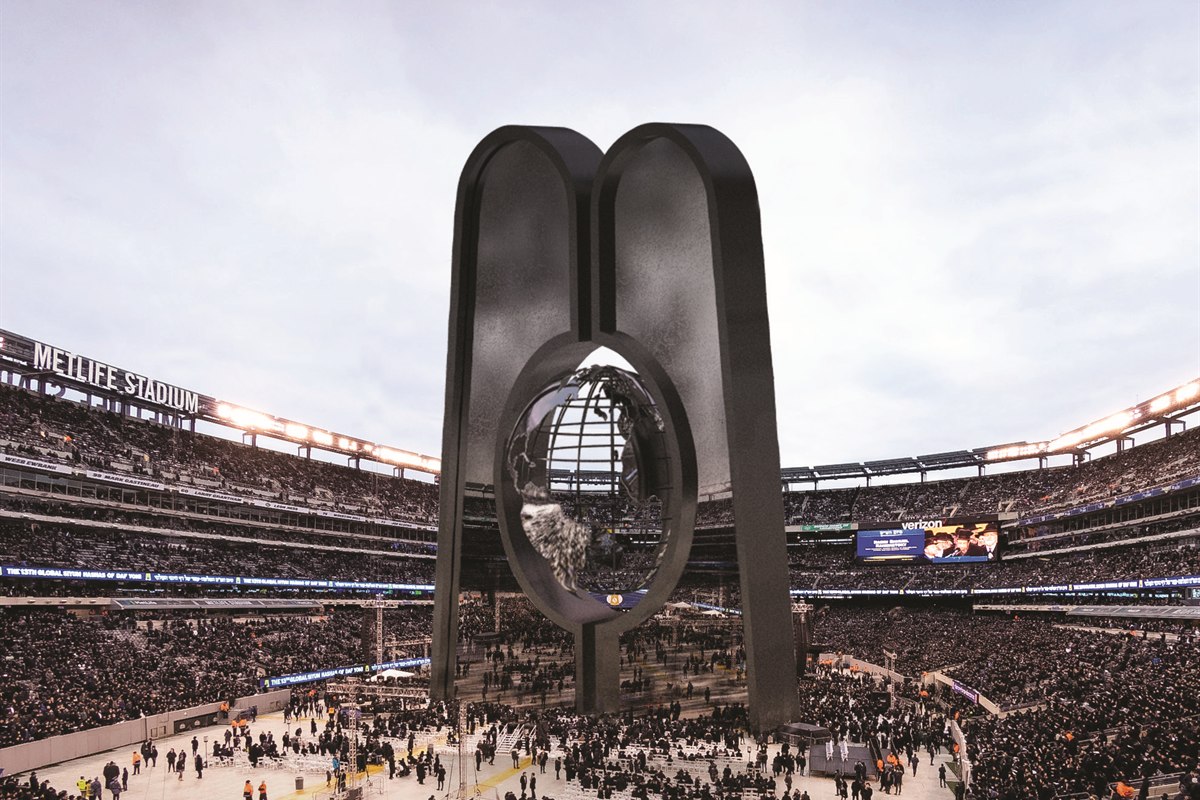
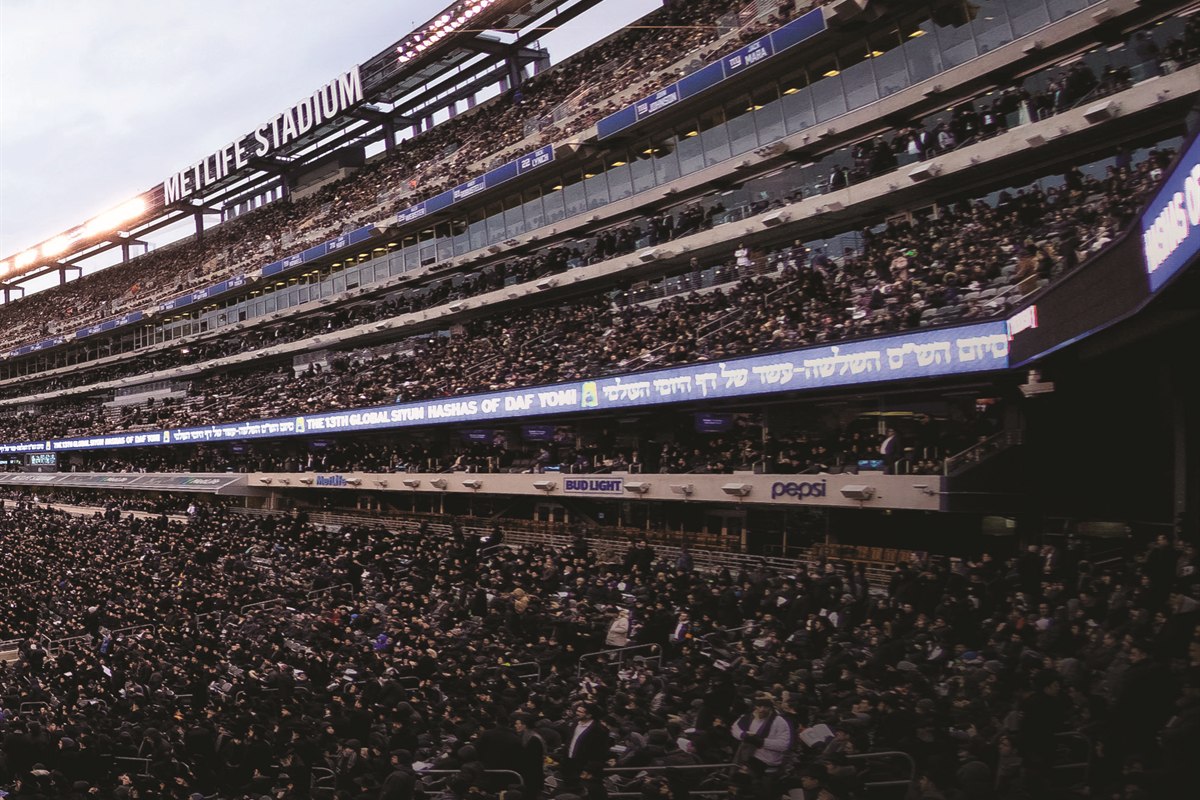
People travel from every corner of the globe, speaking different languages, coming from different backgrounds, belonging to different kehillos, yet united by a single page of Gemara. There are few sights more stirring than walking into a stadium filled with tens of thousands of Jews who have gathered for no other reason than Torah.
No tickets to a championship game can compare.
No concert can produce what happens in those moments.
Because what fills that stadium is not excitement.
It is belonging. It is identity.
It is the unmistakable realization that Torah remains the beating heart of the Jewish people. I have lost count of how many people have told me that Daf Yomi has changed their lives. Some found discipline they never knew they possessed. Others rebuilt their relationship with Torah. Fathers discovered a new connection with their sons. Sons found a language through which to speak to their fathers. Countless Jews began journeys that transformed not only themselves but their families as well.
Many of those journeys began at the Siyum HaShas.
Someone walked into a stadium out of curiosity and walked out with a lifelong commitment.
Someone came to celebrate another person's accomplishment and left determined to begin his own.
Someone experienced, perhaps for the first time, what it means to be part of something infinitely larger than himself.
That is the power of the Siyum HaShas.
And that is why I am writing to you.
Less than a year from now, we will once again have the privilege of creating that moment for Klal Yisroel. Thousands will celebrate. Thousands more will be inspired. And many will begin daily Gemara learning because of what they experience that day.
The opportunity before us is not simply to sponsor an event or reserve a suite. Those are only the mechanics. The real opportunity is to become a partner in what this Siyum HaShas will set in motion long after the lights in the stadium are turned off.
Purchasing a suite at the Siyum HaShas gives you the privilege of sharing an unforgettable experience together. But it also says something about what you believe deserves your support. It declares that when Torah calls, you want to answer in a meaningful way.
My hope is that all of us will have that same blick, recognizing the opportunity before us while it is still in front of us.
Years from now, when another generation gathers to celebrate another Siyum HaShas, I hope you will be able to look back with quiet satisfaction and say, "I didn't merely attend. I helped build it."
That is a privilege that very few opportunities in life can offer.
I sincerely hope you will join us,
Shlomo Werdiger

On a Sunday evening in March, something happened that should probably happen far more often.
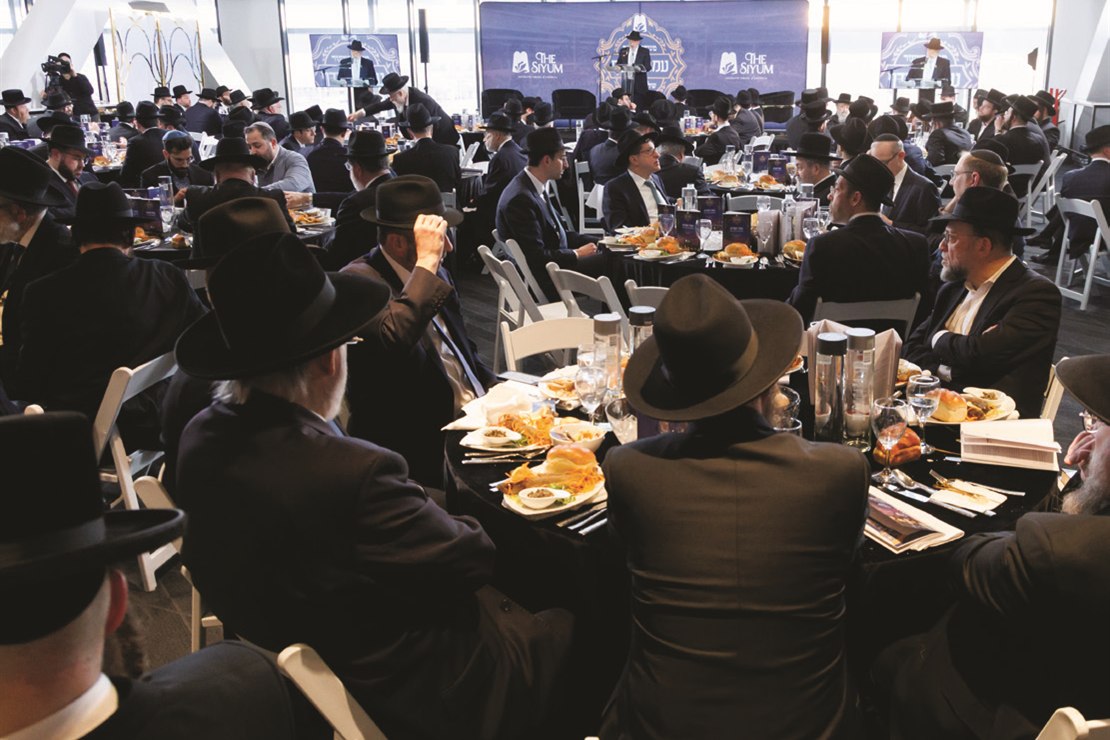
Hundreds of Daf Yomi maggidei shiur and their wives came together for an evening devoted entirely to them. Organized by Agudath Israel of America, the Taamei HaSugyos Daf Yomi Maggidei Shiur Appreciation Event wasn't celebrating the completion of Shas or marking the beginning of a new cycle. It was celebrating the people who make the Daf Yomi movement possible every single day.
When people speak about Daf Yomi, they naturally focus on the lomdim. Tens of thousands of Jews around the world faithfully complete another daf, another masechta, another Shas. We marvel at the consistency, the discipline, the commitment.
But every journey has a guide.
Behind countless Daf Yomi success stories stands a maggid shiur who prepared while everyone else was asleep, reviewed a difficult Tosafos one more time before walking into shul, answered questions after the shiur had officially ended, and somehow found the energy to do it all again the next day.
Day after day. Year after year. Cycle after cycle.
For many lomdim, their maggid shiur becomes far more than the person standing at the front of the room. He is the reassuring voice that makes a difficult sugya understandable. He is the reason someone who once thought Shas was beyond his reach now can't imagine missing a day. His shiur becomes woven into the rhythm of people's lives--before work, after Maariv, during lunchbreaks, on business trips, and even on family vacations.
Yet, the maggidei shiur rarely seek recognition. They're already thinking about tomorrow's daf.
That is what made this evening so meaningful.
The evening itself reflected the very essence of Torah learning. Rather than serving as an intermission from the program, the dinner became part of it. Each course was inspired by a different sugya in Shas, illustrating that Torah is not something confined to a beis medrash. It accompanies a Jew everywhere--even to the dinner table.
Rav Avi Neuberger introduced the opening course with Torah thoughts connected to Machrozos Shel Dagim. Rav Shlomo Cynamon followed with insights on Di Heilige Kurkevon. Rav Yitzchok Dovid Frankel presented the sugya behind Chatichos Basar Al Daf Shel Nachtumim. Rav Noach Isaac Oelbaum demonstrated the practical aspects of Hatmanah, while Rabbi Yossi Glieberman concluded with Zeicher L'Minchas Marcheshes. Every course became another opportunity to learn.
The featured address was delivered by Rav Uri Tiger, whose own life story could itself serve as a lesson in the transformative power of Torah. Raised in a completely secular home in Israel, he eventually became one of the Torah world's respected talmidei chachamim and earned the extraordinary privilege of serving as the personal chavrusa of Rav Chaim Kanievsky zt"l for fifteen years. His remarkable journey reminded everyone that every page of Gemara has the power to change a life. A specially printed edition of his sefer, Zevach Pesach, was presented to every attendee.
Reb Shloime Werdiger, Chairman of Agudath Israel of America, reflected on the immeasurable influence of the maggidei shiur. Every daily shiur represents hours of preparation that almost no one sees. Every explanation offered, every question patiently answered, every difficult sugya clarified creates another connection between a Jew and the eternal words of Chazal. The impact extends far beyond those sitting around the table. Students become teachers. Children watch fathers learning. Entire families grow because one person decided to prepare another daf.
One of the evening's most engaging moments came during a panel discussion moderated by Rabbi Yitzchok Hisiger, featuring maggidei shiur Rabbi Yekusiel Elimelech Friedman, Rabbi Barry Liebowitz, and Rabbi Yechezkel Hartman. The discussion explored the challenges and rewards of delivering a daily Daf Yomi shiur, practical advice for fellow maggidei shiur, and the emerging role of artificial intelligence and animation in enhancing Torah instruction. More than anything, the conversation offered a rare glimpse into the devotion required to maintain a commitment that allows no days off.
As the program continued, attendees watched a moving video tribute honoring the maggidei shiur and, equally important, their wives. It was a fitting reminder that no one delivers thousands of shiurim alone. Behind every maggid shiur stands a wife who has shared the commitment from the very beginning. She has adjusted family schedules, accepted interruptions, welcomed late arrivals, and understood that another Jew's spiritual growth sometimes depends on her husband's availability. Her contribution may not be delivered from behind a shtender, but it is present in every shiur nonetheless.
That thought was beautifully highlighted as the evening drew to a close, when each wife received a specially crafted Lucite keepsake containing a personal letter signed by every member of the Moetzes Gedolei HaTorah. It was a public acknowledgment that the success of Daf Yomi belongs to them as well.
Perhaps that was the evening's greatest lesson.
We celebrate every Siyum HaShas with enormous joy. We marvel at the tens of thousands who complete the cycle.
But every one of those celebrations rests upon countless ordinary days, days when a maggid shiur arrived prepared, opened a Gemara, and faithfully taught another daf.
Those moments rarely make headlines.
Yet, collectively, they account for millions upon millions of hours of limud haTorah across the globe.
For one Sunday evening in March, the Torah world paused to recognize those quiet architects of the Daf Yomi revolution.
It was a tribute that was richly deserved...and long overdue.

At the heart of The Siyum HaShas is the image of a ship. It carries within it the story of the daf, the story of Klal Yisroel, and the long journey that brings us, generation after generation, to the day of the Siyum.
Chazal tell us (Yevamos 121) that Rebbi Akiva was once saved at sea by holding fast to a דף של ספינה, a plank of a ship, as the waves broke around him. Rav Meir Shapiro saw in those words an allusion to the daf Gemara -- the page to which a Yid holds fast as he makes his way through the waves and upheavals of the generations.
This is the דף של ספינה of Klal Yisroel. Generations come and go. Countries change, societies change, and the tides of galus carry us from one shore to another. But the daf remains in our hands -- the same daf learned in the beis medrash and at home, on the road and in communities scattered across the world.
The sails of the ship take the form of an open page. Page follows page. One daf joins another, one masechta the next, until the pages themselves become the force that carries the journey forward.
A masechta, as its name suggests, is a weaving: thread crossing thread until a fabric emerges. (Sefer Chassidim) So it is with Torah. Daf joins daf, masechta joins masechta, until individual pages have been woven into an entire world. And when the final page is reached, it is not really an ending. We turn back to the beginning and start again.
Between those pages rests another element of the image: the bookmark. It quietly holds a person's place, so that tomorrow he can return and continue where he left off. It is a small expression of kevius -- one day joined to the next, one seder to another, one daf to another -- until, almost imperceptibly, a person has traveled through Shas.
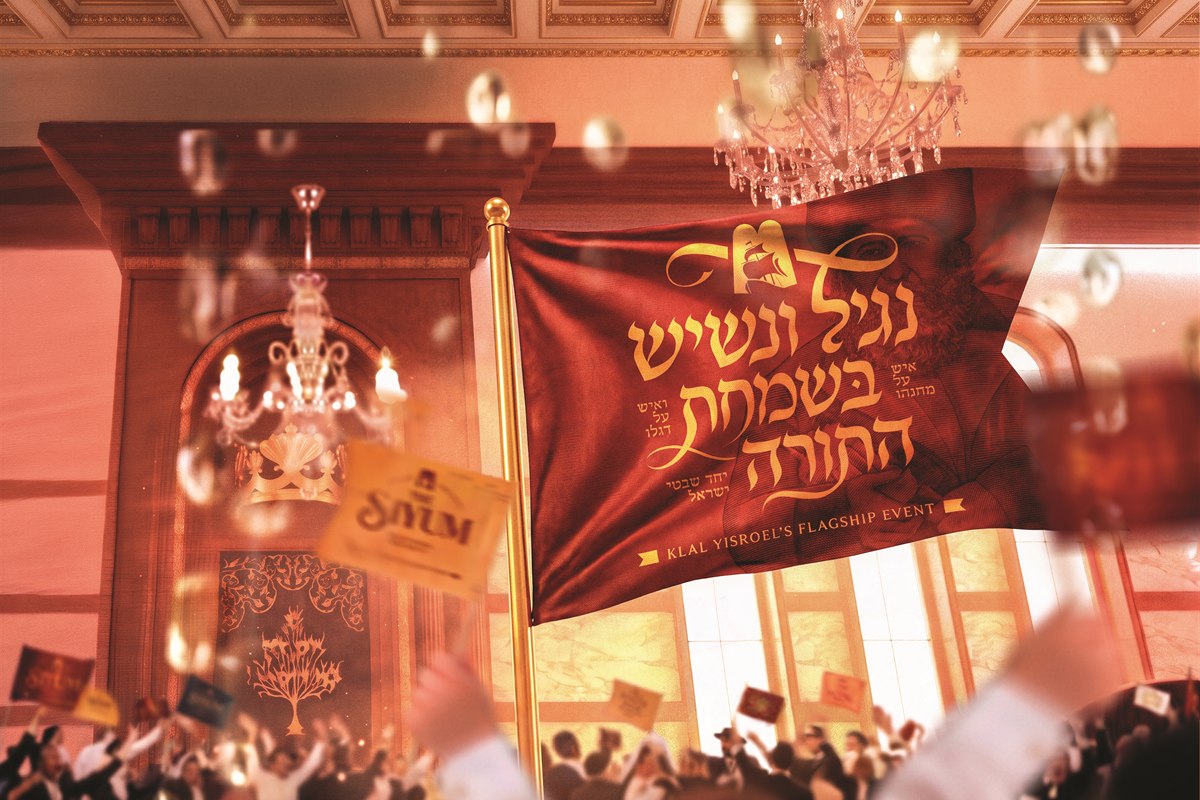
And on the day of the Siyum, that bookmark rises from the sefer and becomes a flag. What rested quietly between the pages through years of learning is now lifted high. The private toil of the individual -- a day, a daf, a seder at a time -- becomes something larger: the banner of Torah carried by all of Klal Yisroel.
A ship, too, carries a flag. It tells the world where it comes from, to whom it belongs, and under whose banner it sails. So does this one. Its flag declares not only its identity, but its direction. Torah is where we come from. Torah is what carries us. And Torah is where we are headed.
There are stretches of the journey when the horizon disappears. The sea grows rough; the fog settles in. But the course does not change. The light of Torah still reaches through the mist, and its voice can still be heard. The ship sails on -- its flag aloft, its bearings intact, its destination clear.
In fact, the language of the flag is embedded in the very origins of Daf Yomi. Rav Meir Shapiro himself once wrote to his young students, urging them to carry the mission of the daf with pride: ".שאו דגל התורה ברמה, כי עיני כל ישראל נשואות אליכם גבורי החיל"
But Klal Yisroel has never sailed beneath only one kind of flag. איש על מחנהו ואיש על דגלו. Each community with its own mesorah; each chaburah with its own seder; each shevet with its own degel and its own chelek in Torah. Different colors, different forms, different paths -- and yet the same Torah, the same daf, the same kol Torah.
At the Siyum, איש על דגלו becomes יחד שבטי ישראל. The many bookmarks have become many flags, and the many flags gather in one place. Not because the distinctions have disappeared, but because each has arrived with its own degel, its own mesorah, its own chelek in Torah -- and all are gathered around the same center; ובשם אלקינו נדגול.
And now, as we celebrate the Siyum HaTorah, we rejoice in what has been completed, and we look toward what remains before us. We dance for the pages already learned and for those still waiting to be opened. Because in Torah, completion is never simply an ending. We do not celebrate by taking leave of Torah, but by beginning again: a new kabbalah, a new haschalah, another journey forward. Until we stand together once more for Kabbalas HaTorah -- אחד בלב אחד.

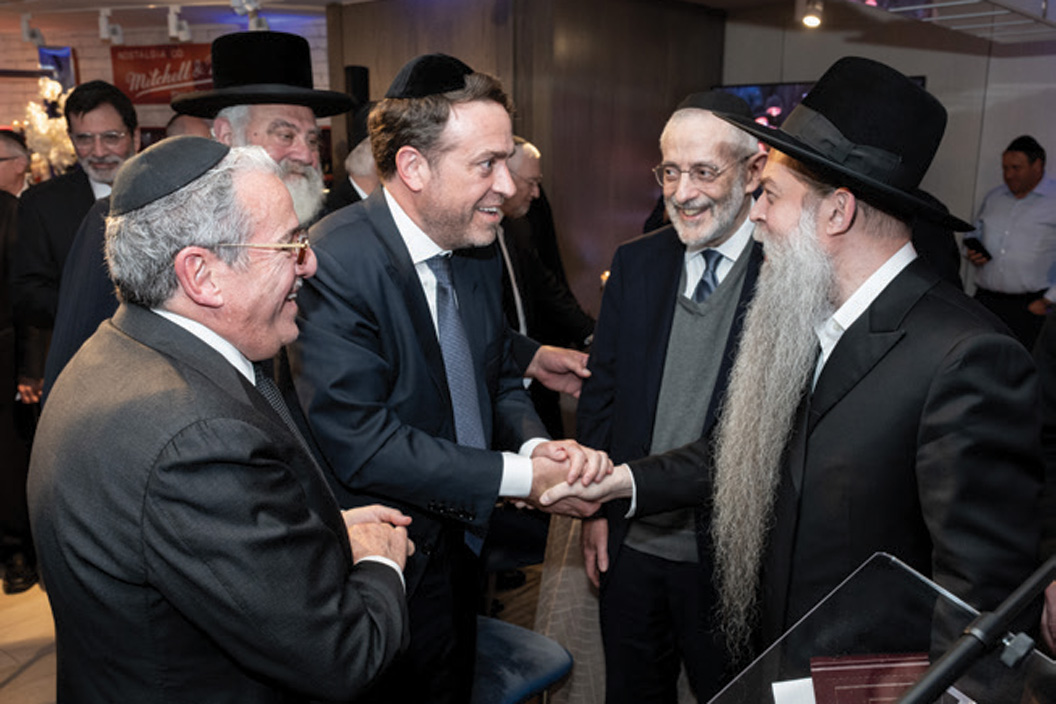
A distinguished gathering of askanim, supporters, rabbonim, and community leaders assembled at the Manhattan offices of Outerstuff for the inaugural pre-Siyum HaShas kickoff event, hosted by Shloime Werdiger, Chairman of the Board of Agudath Israel of America.
The evening formally launched the early campaign leading toward the 14th Siyum HaShas at MetLife Stadium. More than simply an organizational meeting, the event presented a bold vision for expanding the reach of Daf Yomi, strengthening limud haTorah, and creating what will become the largest and most impactful event of harbotzas haTorah in history.
The evening focused not only on preparing for the Siyum itself, but on ensuring that its influence extends far beyond a single day. Speaker after speaker emphasized that the Siyum should serve as a catalyst to inspire more Yidden to embrace daily Gemara learning and deepen their lifelong connection to Torah.
A central theme echoed throughout the evening was the ambitious aspiration of bringing one million people worldwide into the orbit of the Siyum HaShas and inspiring them in limud haTorah. Organizers stressed that success will not be measured solely by filling MetLife Stadium, but by the lasting spiritual impact the Siyum can have on individuals, families, and communities across the globe.
The gathering also marked the first official opportunity for supporters to reserve premium suites for the Siyum. Attendees were invited to become early partners in what organizers described as a historic undertaking that has already begun generating tremendous enthusiasm and momentum.
Rabbi Naftali Miller opened the program by welcoming guests and introducing Mr. Werdiger.
In his remarks, Mr. Werdiger spoke passionately about the privilege and responsibility of preparing for another Siyum HaShas. He described the event as far more than a celebration of completing Shas, calling it a unique opportunity to inspire countless Yidden to begin learning, reconnecting with Torah, and becoming part of something much greater than themselves.
Mr. Werdiger then introduced R' Shmuel Yosef Rieder, who delivered a comprehensive presentation entitled "Inspiring the Masses — Programs and Initiatives."
R' Shmuel Yosef outlined an expansive array of developing initiatives aimed at making limud haTorah more accessible while bringing the excitement of Daf Yomi to broader audiences than ever before. His presentation highlighted innovative programs designed to extend the Siyum's reach well beyond the stadium itself, with a particular emphasis on drawing one million people into the Siyum HaShas experience and encouraging greater commitment to daily Torah learning.
The audience then heard from renowned Daf Yomi maggid shiur Rabbi Sruly Borenstein, who delivered heartfelt and inspiring remarks about the extraordinary impact Daf Yomi has had on individuals and families throughout the world.
Rabbi Borenstein spoke emotionally about people from every background who have discovered consistency, purpose, and spiritual growth through learning a daily daf. He described the Siyum HaShas as a transformational moment for Klal Yisroel, sharing moving examples of lives that have been profoundly changed through Daf Yomi and emphasizing the remarkable power that daily Torah learning has to elevate every Yid.
The keynote divrei chizuk were delivered by Rav Binyomin Eisenberger, rov of Heichal Hatefillah in Boro Park, who spoke passionately about the immense zechus of supporting and strengthening the Siyum HaShas. Rav Eisenberger encouraged those present to view their participation not simply as helping organize a major event, but as investing in the future spiritual strength of Klal Yisroel and in the continued growth of Torah learning for generations to come.
Throughout the evening, the excitement in the room was unmistakable. Even after the formal program concluded, attendees lingered, discussing ideas, exploring new opportunities, and sharing their enthusiasm for the vision that had been presented.
The evening served as a powerful reminder that the Siyum HaShas is about far more than celebrating the completion of another cycle of Shas. It is about inspiring the next generation of learners, expanding the reach of Daf Yomi, and uniting Yidden around the world through the timeless power of Torah.

There is something about Simchas Torah that brings out a special side of Klal Yisroel. Shuls come alive with singing and dancing. Children wave their flags with boundless enthusiasm. And amid the hakafos, with the Sifrei Torah held close, one can almost feel the extraordinary bond that has carried our people through generations.
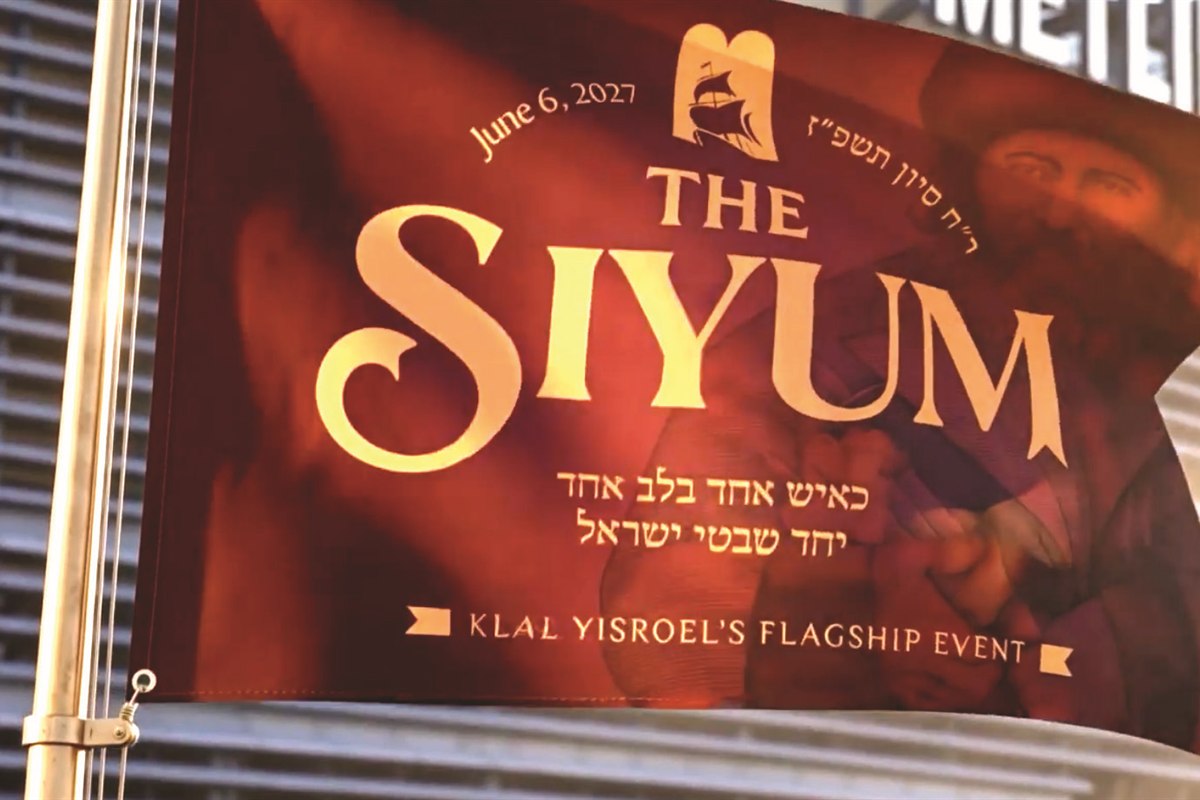
This year, something new joined the celebration: flags announcing the upcoming Siyum HaShas.
Distributed in communities and stores across America, the flags brought the excitement of the Siyum, still nine months away, directly into the hakafos.
The timing was especially fitting. On Simchas Torah, we celebrate completing the Torah and immediately begin again. The Siyum HaShas embodies that same beautiful rhythm on an extraordinary scale, as thousands upon thousands of Yidden move together toward completing Shas and beginning another cycle.
The flags were part of Agudath Israel's broader Tishrei campaign to build anticipation for the Siyum. An elaborate special gilyon introduced the campaign's branding, messaging, and vision, giving Klal Yisroel an early glimpse of the historic celebration ahead.
Nine months may seem distant amid the demands of everyday life. But anyone who has experienced a Siyum HaShas knows that its excitement begins long before the stadium fills.
It begins at Shabbos tables, in conversations between fathers and children, and in the hearts of lomdei Daf Yomi who realize how close they are to completing an extraordinary journey.
The Tishrei rollout gave that anticipation a presence in homes and shuls nationwide.
And perhaps its most powerful message was this: The Siyum is months away, but the opportunity to become part of what we will celebrate is already here.

In batei midrashim and boardrooms, shteeblech and homeset shtenders, preparations are well underway for the upcoming Siyum HaShas.
Lomdim are preparing in the most obvious way — by plowing through one mesechta after the next, and for the first time in seven and a half years, the major prize — the ability to say the sweetest of words "Hadran Alach Talmud Bavli" is finally in sight. Families of lomdim are also preparing. They have a jump in their step as they anticipate celebrating their hero for his diligence and dedication. And Klal Yisroel as a whole -- even those who did not formally participate in the Daf Yomi cycle -- are preparing too. For some, that means adding a small seder. For others, it's inquiring about a Daf shiur. And for nearly everyone, it includes feeling the excitement as one of the greatest days on the Jewish calendar draws even closer.
And across six or so conference rooms accustomed to the regular routine of deadlines and humdrum of emails, logistics and planning, there is another conversation taking place - months before the first bus pulls into the Meadowlands. In those offices, an unusual group has begun coming together to prepare not for the Siyum HaShas as lomdim, but for the formidable task of bringing its celebration to life.
They are some of the most recognizable names in Jewish event production today. Men who have built careers around making the complicated look effortless. Each comes from a different corner of the industry; each has been retained for a particular area of expertise. And for the Siyum, all of them are working toward the same objective.
How do you give Torah the stage it deserves? And how does the celebration that has become the most iconic day of our twenty first century American galus retain that glorious power to continue to inspire a generation of lomdim?
It's a formidable task and the answer isn't simply a larger stage or even merely an impressive event.
A stage worthy of an event that comes once in seven and a half years, when the quiet, daily commitment of hundreds of thousands of Yidden suddenly becomes visible; when the daf learned early in the morning and late at night, on airplanes and trains and between meetings, culminates in tens of thousands of people rising together in celebration of Torah.
The scale of the Siyum demands extraordinary logistics and its purpose — to be an evening that screams and roars Ki Heim Chayeinu! - demands something so much more.
It has to be safe. It has to be seamless. It has to inspire. And through the speeches, music and videos, the entrances and transitions, the advertising and imagery, the thousands of seemingly unrelated decisions made between now and the Siyum, it has to communicate one unmistakable message:
This is about Life itself. This is about who we are as a people and as individuals. This is about Torah.
To accomplish that, Agudas Yisroel has assembled a remarkable collection of talent.
In the world of Jewish production, Shloime Steinmetz of Pivot Group has become something of a creative impresario -- the man behind productions that have repeatedly pushed the boundaries of what a frum event can look, sound and feel like. From the groundbreaking Interen productions to HASC's A Time for Music, the Pivot Group founder has built a reputation for thinking beyond the stage itself: not simply what happens next in a program, but what an audience should be feeling when it happens. At the Siyum, that instinct has been given perhaps its largest canvas yet. Steinmetz is serving as creative director, with his fingerprints on the program's flow, videos, music, performers and atmosphere -- and, above all, on ensuring that all those elements ultimately point in the same direction. The spectacle cannot become the story. Torah has to remain the story.
And while Shloime is writing the script, another veteran producer, Eli Friedman, is turning that into an experience. Eli is a familiar hand behind some of the frum community's most ambitious large-scale events, including the massive Dirshu Siyum at the Prudential Center. If there is a word to describe Eli's modus operandi, it's "seamless." He wants that from the moment you walk into the stadium perimeter -- the producers, AV and setup teams, and thousands of moving parts ultimately feel like none at all, so that Shloime's legendary fingerprint will be actualized in a natural and holistic feel.
Motty Landau of Heart.works — perhaps the frum world's most sophisticated marketing agency with both the brilliance and sensitivity of creating campaigns for the community, is charged with branding and communications: making certain that what the Siyum says before, during and around the event is commensurate with what the evening represents.
But even the most impressive program, effortlessly carried out and synchronized with a coordinated marketing plan, is hard to inspire if the lines to get into the Stadium stall, the signage is unclear and security doesn't have clear instructions. Incredibly, the Agudah hadn't spared an expense and understands even that nuance. Yochi Fleishman of YF Productions has made something of a specialty of the logistical challenges that accompany enormous Jewish gatherings, coordinating everything from crowd movement and transportation to police, security and municipal agencies. Most recently, his team oversaw logistics surrounding the massive Satmar Hachnasas Sefer Torah in Williamsburg, working alongside the NYPD, Shomrim and the Mayor's Office, and for the biggest Jewish event on the calendar, Yochi will be at the stadium's entrance, ensuring the flow is safe, smooth and participants are conditioned to soak in everything that magnificent display of Kavod HaTorah has to offer.
And at the center of all those intersecting operations is Mrs. Milka Cook, Agudah's Director of Special Events, who is coordinating the undertaking on behalf of Agudas Yisroel, together with Shlomo Zaks of Z&Co., who is working across the various teams to help turn their individual disciplines into a single, cohesive production, and Mrs. Tziyona Kleinhendler, who is overseeing fundraising operations.
When word got out about the team tapped to lead this special day, even production insiders were impressed. Those who are involved read less a conventional production hierarchy than a collection of specialists. And when you bring in the most sophisticated specialists in each aspect of a production, you get an unparalleled experience — but when those same professionals bring heart, it's extraordinary. And here they are, because more than a profession, The Siyum is, for these chevra, personal.
In a special conversation before the event, they all expressed the same sentiment.
Shloime remembers going to an earlier Siyum, his younger hand clutching his father's palm as he watched Madison Square Garden fill with yidden. That moment — surrounded by his fellow brothers, saying Amein Yehei Shemei Rabbah in unison, made a lasting impression. Eli Friedman remembers walking around an earlier event and seeing hundreds of ordinary 9 — 5 businessmen and blue-collar workers proudly proclaiming the Hadran — which inspired his own learning. And Motty Landau committed to the Daf as he took in the sight and sounds of the 2005 extraordinary evening. Now, they are on the inside, their hearts and minds working overtime to ensure that the evening will be everything it deserves, and demands, to be.
In a way, the sheer success of The Siyum has also become a challenge. The Siyum is the talk not just of one beis medrash or one kehilla — in every community and in each shul, Klal Yisroel is genuinely craving the grand day, which inherently means there is another complication — because Klal Yisroel really means Klal Yisroel. Chassidish. Yeshivish. Modern Orthodox. Different communities, different sensibilities, different musical and cultural languages - all walking into the same stadium for the same reason. But the common denominator isn't a production style. It's Torah. And more than anything, the energy that's coursing through this assembled team is focused on ensuring just that — that all externalities melt away in celebration for the gift that Hashem bestowed on us.
And watching it come together is something special. Here at the Agudah, together with our partners, we're privileged to actualize this most awesome day that will be remembered for generations.
I'm humbled to be a part of this and I'm grateful you joined me.
Naftali Miller, Chief Development Officer

When Agudah first approached MetLife, the stadium officials were respectful but skeptical. It took many conversations to get them comfortable with the fact that we can execute at the level they are used to operating. Two Siyums later, there may be no better way to appreciate what makes the Siyum unusual than to ask people for whom enormous events are entirely ordinary.
In a conversation with our staff, MetLife Stadium's outgoing President and CEO Ron VanDeVeen and incoming President and CEO Mark Stefanacci discussed what it is like when the Siyum comes to their building - and why, after years of hosting events at the highest level, this one has stayed with them.
VanDeVeen has spent decades in the stadium business. He has worked in the Meadowlands since his years at Continental Airlines Arena and has watched the Siyum evolve from multiple venues in 2005 to the massive, unified gatherings at MetLife in 2012 and 2020. Stefanacci, who succeeds him as president and CEO, will now inherit that relationship, while VanDeVeen remains involved on the event-booking side. MetLife knows crowds. It knows what tens of thousands of people arriving simultaneously does to roads and parking lots. It knows gates and security, broadcast infrastructure and police coordination, production schedules and weather contingencies. The Siyum requires all of it. And yet, the executives told us, it doesn't feel like just another stadium event. VanDeVeen described working on the Siyum as one of the highlights of his career.
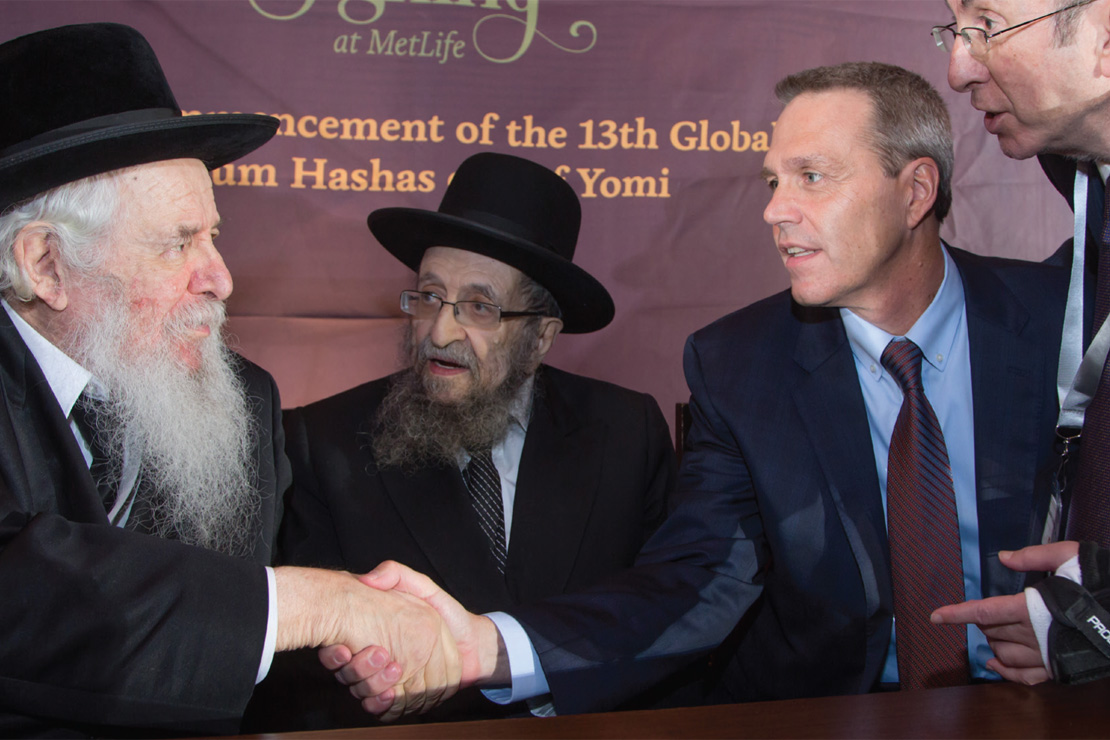
Rabbi Yosef Chaim Golding, who is leading the Agudah's interactions with Metlife, remembers VanDeVeen calling him over to show him "something special". VanDeVeen, who in his capacity as CEO of one of the world's biggest venues, has seen and interacted with nearly every major secular celebrity from around the world. Yet on his screen, he had two photos that mattered to him: One of his family members, and the second of himself with the Novominsker Rebbe — a moment, he said, was one of the most special interactions of his life.
Stadium employees and law-enforcement personnel noticed something else during the previous Siyum: the usual alcohol-related problems and behavioral incidents associated with many major stadium events were conspicuously absent. Instead, employees found themselves being thanked - again and again - by the people they were there to serve.
For the people who operate a building designed for spectacle, there was something different about a crowd that had gathered not to watch celebrities perform or teams compete, but to celebrate learning.
And MetLife's involvement did not stop at the stadium walls. The previous Siyum required translation rooms, international connectivity and substantial third-party broadcast support, ultimately carrying the event to an audience of approximately half a million people around the world. This time, the teams on both sides are bringing that institutional knowledge back to the table.
And then trying to go further.